ECB accounts point to December rate hike after October pause
ECB policymakers had broad support for tightening in October but waited for more inflation evidence before a likely December move.
Top-rated brokers
Compare all 9- 1
 XMBest overall for gold CFDsGold spread0.25Visit XM (opens in a new tab)
- 2
 XTBGold CFDs and real gold ETFsGold spread0.35Visit XTB (opens in a new tab)
- 3
 PepperstoneMost regulatorsGold spread0.05Visit Pepperstone (opens in a new tab)
CFDs are complex instruments and come with a high risk of losing money rapidly due to leverage. You should consider whether you understand how CFDs work and whether you can afford to take the high risk of losing your money.

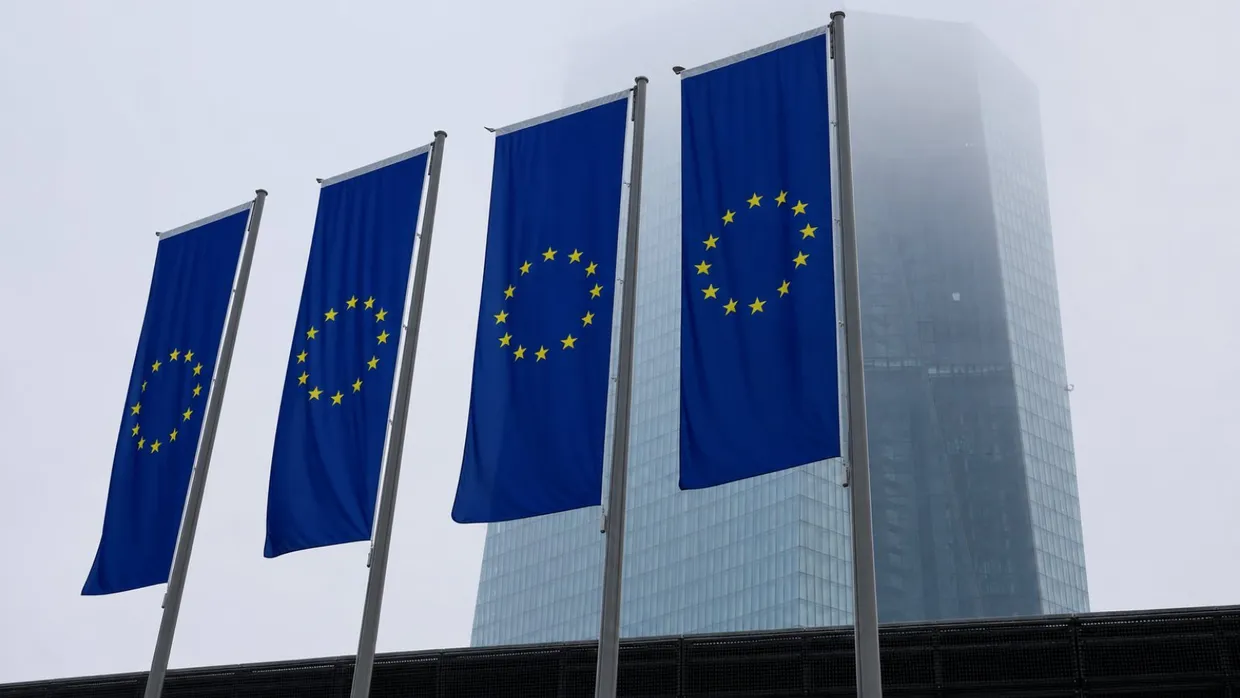
European Central Bank policymakers came close to raising interest rates at their Oct 28-29 meeting, but chose to wait for more evidence on inflation risks before tightening policy further.
The ECB left rates unchanged at that gathering, while warning that inflation could rise more than previously expected. For gold and XAU/USD traders, the decision adds to the wider global rates backdrop, though the ECB accounts did not directly address gold or the US dollar.
October debate
The meeting accounts published on Thursday, Nov 26, showed that many policymakers already saw enough evidence to justify another move after the September Governing Council meeting.
The ECB said a large number of members could have supported a rate increase at the October meeting because incoming data had strengthened the case for additional tightening. Policymakers nevertheless opted for a delay, choosing to gather further information before acting.
The accounts showed that officials discussed whether an immediate move would have brought forward tightening that was already likely to be needed. The ECB described such a step as a way to “frontload” the required policy response.
At the same time, policymakers agreed that second-round effects from inflation had not yet materialised. Even so, they said policy needed to act pre-emptively to prevent those effects from taking hold.
December outlook
Since the October meeting, most ECB policymakers speaking publicly and privately have signalled that the Governing Council is likely to raise rates by 25 basis points on Dec 17.
That has made a December move appear highly likely, based on the signals from officials after the meeting. The less certain question is what happens after that.
Few policymakers have given guidance beyond December. One reason is that important wage negotiations between unions and employers are still unfinished. Those talks are viewed as having a significant effect on the future path of inflation.
For markets, the December meeting is therefore not only about the immediate rate decision, but also about whether the ECB gives any indication of how it will judge wage developments, energy prices and the risk of persistent inflation early in the next phase of policy.
Inflation risks
Financial investors do not think the ECB will necessarily be finished after December. Their view is shaped in part by energy markets, with oil and gas prices far above the ECB’s “baseline” scenario.
A cold winter could push utility costs higher, especially because natural gas storage levels are relatively low. That would keep pressure on policymakers if higher energy costs begin to feed into broader inflation.
Still, the case for an urgent follow-up rate hike after December is less clear. Inflation has not yet produced dangerous second-round effects, the labour market is softer than during the 2022 inflation episode, and energy prices have recently fallen back from highs that had approached the ECB’s “severe” scenario.
Those factors leave the ECB balancing two risks: acting too slowly if inflation pressures become entrenched, or tightening further when some of the most acute energy-price pressure has already eased.
Leadership change
The policy debate is also complicated by coming changes at the top of the ECB.
ECB President Christine Lagarde and board member Isabel Schnabel are both due to leave in the coming months. The central bank will get new leadership in early 2027.
Future rate debates are therefore expected to be overseen by a new president, most likely Spain’s Pablo Hernandez de Cos. That transition adds another layer of uncertainty to the outlook beyond the widely signalled December decision.