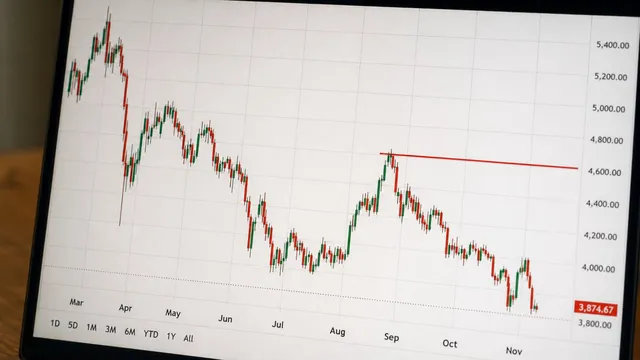
Gold falls near $3,876 as Fed speakers keep focus on inflation
Gold slipped in Asia as traders awaited Kevin Warsh’s AI comments and priced in another Fed rate increase in December.
Top-rated brokers
Compare all 9- 1
 XMBest overall for gold CFDsGold spread0.25Visit XM (opens in a new tab)
- 2
 XTBGold CFDs and real gold ETFsGold spread0.35Visit XTB (opens in a new tab)
- 3
 PepperstoneMost regulatorsGold spread0.05Visit Pepperstone (opens in a new tab)
CFDs are complex instruments and come with a high risk of losing money rapidly due to leverage. You should consider whether you understand how CFDs work and whether you can afford to take the high risk of losing your money.

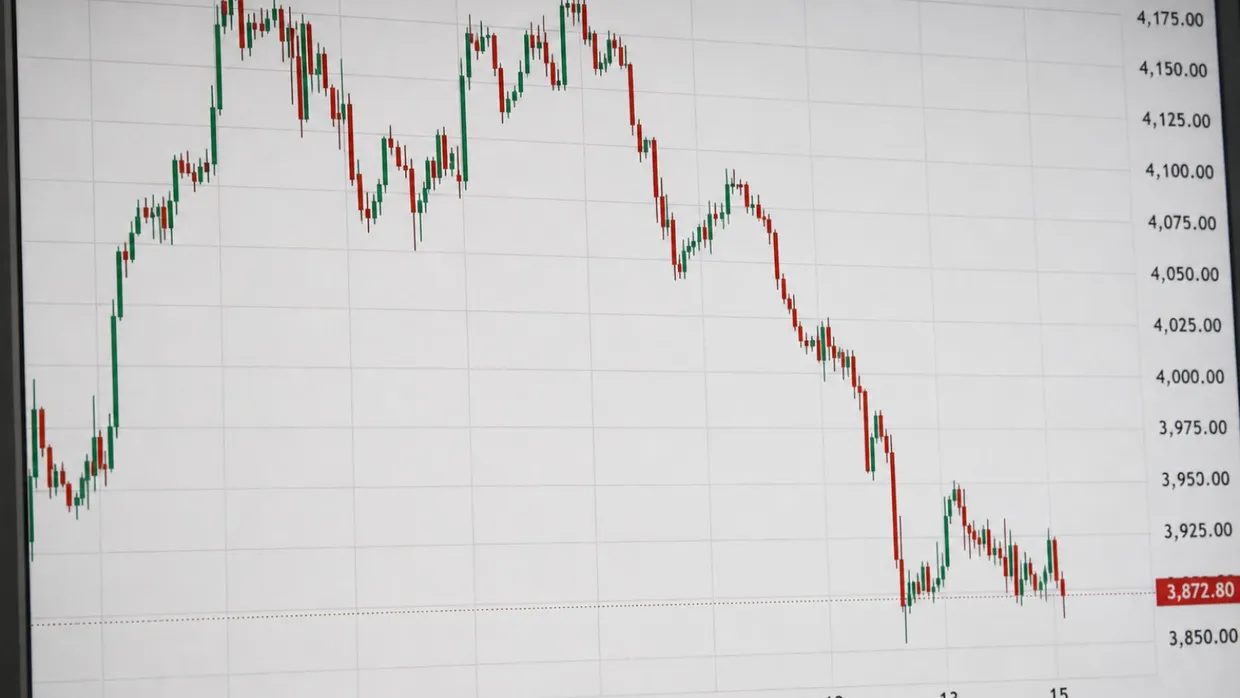
Gold extended its recent decline in Asian trading, slipping to around $3,876 an ounce as investors weighed a run of hawkish Federal Reserve commentary and looked ahead to remarks from Kevin Warsh.
The metal has dropped almost 7% since last Tuesday, with traders focused on whether the break below $4,000 can deepen if the Fed’s policy message remains firm. A stronger US dollar and higher short-term Treasury yields are central risks for gold when markets expect rates to stay higher for longer.
Gold weakens as rate bets build
Gold has taken much of the pressure from the recent shift in Fed tone. The move toward $3,876 came after Goldman Sachs lowered its end-2027 gold forecast to $4,650 from $4,800, citing expectations of another rate increase in March 2027.
The $4,000 level is now an important reference point for market sentiment after being broken. Analysts have also flagged the risk of ETF selling, adding to concerns that a hawkish policy signal could accelerate losses.
For XAU/USD traders, the immediate issue is less about a single data point and more about how the Fed frames inflation, rates and the economic effect of artificial intelligence. If policy makers reinforce the case for a longer tightening cycle, the US dollar may retain support, leaving gold more exposed.
Fed speakers keep a hawkish tone
Warsh is scheduled to give opening remarks at the Fed’s Productivity and Jobs Task Force Conference on Monday at 17:00 GMT, or 12:00 pm ET. The event is hosted by the San Francisco Fed and is one of five task forces he established after taking office in May.
His appearance follows several recent Fed comments pointing to persistent inflation concerns. Kansas City Fed President Jeff Schmid said inflation remains too high and is moving in the wrong direction. He also pushed back against the view that demand linked to AI is beyond the reach of higher interest rates.
Boston Fed President Susan Collins backed a steady and gradual pace of rate increases, while noting that the eventual rate path may be higher than she had previously expected. Vice Chair Philip Jefferson said inflation remains the most important guide for policy and warned that higher energy prices could feed into broader price pressures. PCE inflation stood at 3.6% in September.
The Fed raised rates to a 3.75% to 4.00% range in September and left them unchanged in October. Markets are fully priced for a quarter-point increase at the December 8-9 meeting, with a small chance of a larger move.
AI debate matters for inflation view
The conference will bring together technology executives, economists and employers to discuss whether artificial intelligence will reduce inflation, raise prices or replace workers.
Warsh has argued that AI could eventually allow companies to produce more at lower cost, easing price pressures. He highlighted the surge in AI investment in October as one factor behind higher inflation, but he has also presented AI as a potential future disinflationary force.
Other Fed officials have been more cautious, seeing the AI boom as a source of demand that may be adding to inflation now, while any productivity gains remain uncertain. That difference in emphasis is why traders are likely to focus closely on Warsh’s tone.
Markets watch Warsh and minutes
Opening remarks at a themed conference may offer limited direct guidance on policy. Warsh also said in October that he does not prejudge meetings.
Still, any comment on AI’s effect on inflation will be read for clues on the December decision and the broader rate path. If Warsh stresses future disinflation from AI, traders may see a reason for the Fed to stop after a few more hikes, which could ease pressure on short-term yields and gold. If he aligns more closely with Schmid’s view that AI-driven demand responds to rates, it would support expectations for a longer tightening cycle and a firmer US dollar.
Fed minutes are due on Wednesday at 19:00 GMT, giving markets another policy signal after Warsh’s remarks.