Chinese chip shares surge as Beijing pledges market support
Chinese semiconductor stocks posted record gains after Beijing signalled stronger state-backed support for equities and liquidity.
Top-rated brokers
Compare all 9- 1
 XMBest overall for gold CFDsGold spread0.25Visit XM (opens in a new tab)
- 2
 XTBGold CFDs and real gold ETFsGold spread0.35Visit XTB (opens in a new tab)
- 3
 PepperstoneMost regulatorsGold spread0.05Visit Pepperstone (opens in a new tab)
CFDs are complex instruments and come with a high risk of losing money rapidly due to leverage. You should consider whether you understand how CFDs work and whether you can afford to take the high risk of losing your money.

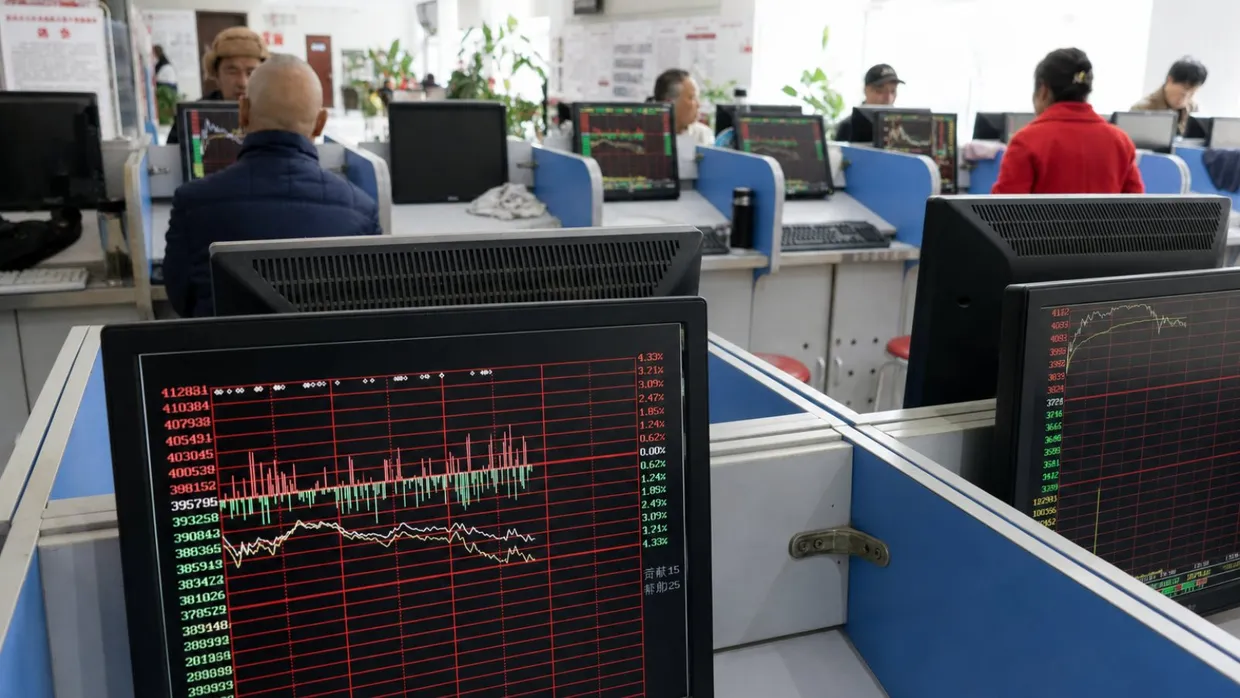
Chinese equities rallied sharply on Friday after top policymakers signalled a broader effort to support the market through state-backed funds and stronger liquidity measures.
The move was led by mainland chipmakers, with gains spreading across major China and Hong Kong indexes. For gold and XAU/USD traders, the episode is mainly a broader risk-sentiment development rather than a direct bullion catalyst, as it highlights how policy signals in China can quickly affect investor appetite across global markets.
Semiconductor rebound
China’s technology-heavy STAR index jumped 14%, with chipmakers including CXMT, Cambricon and SMIC among the names leading the advance.
The CSI Semiconductor index, which tracks 40 chip stocks, rose 17.6%. Wind Information data show that was its largest one-day gain on record, exceeding the previous record of nearly 17% set in late 2024.
The rally extended beyond semiconductors. Hong Kong’s Hang Seng index gained 2%, while the CSI 300 index advanced 4%. Wind data show that was the CSI 300’s biggest increase since October 2024.
The rebound followed a weak session on Thursday, when the CSI 300 fell to its lowest level since the escalation of the U.S.-China tariff war in the spring of 2025.
Technology shares have been under pressure as investors assess the commercial prospects of Chinese artificial intelligence developers and the impact of tighter U.S. controls on advanced chips. The U.S. last week announced a new rule designed to further limit Chinese companies’ access to advanced AI chips, including through overseas data centres.
Policy support
The market turn came after Chinese Premier Li Qiang oversaw a Friday morning meeting of the State Council, China’s top governing body.
Officials pledged to strengthen the role of the “National Team”, a term used for state-backed funds, in stabilising markets and ensuring ample liquidity. Bob Chen, a Shanghai-based venture capitalist and economist, said it was the first time a State Council meeting had made an explicit reference to the national team.
Authorities also said capital markets are important to the wider economy, a rare message from a government that has not always taken a favourable view of the financial sector.
Chen said the government is now putting stock market performance at the highest level of priority, which is helping investor confidence. Zong Ke, a portfolio manager at a Shanghai-based quantitative fund, called the language from top officials very strong.
The timing also mattered. The State Council readout is usually released after trading has closed, but this one appeared around noon local time while markets were still open. Traders viewed the intraday release as a bullish signal.
Ke said trading volumes accelerated after the readout was published around 1:00 p.m. local time, or 12:00 a.m. ET. Full-day turnover across the Shanghai, Shenzhen and Beijing exchanges was 52% higher than in the previous session.
Market context
Policymakers also pledged to strengthen stabilisation funds such as Central Huijin Investment, the state-owned firm that holds equity stakes on behalf of the State Council.
Hong Hao, managing partner of Lotus Asset Management, said the message effectively formalised Central Huijin’s position as a state stabilisation fund and was significantly positive for the market. Hao said he expects the latest rally to be more durable than previous brief gains sparked by stimulus discussions, adding that “this time it’s for real.”
The State Council also promised improved policies to guide medium- and long-term money, including insurance and social security funds, into equities. Officials encouraged listed companies to raise dividends and increase share buybacks, while also pledging a crackdown on financial fraud to protect investors.
Ke said state-backed funds are likely to accelerate asset purchases and that more supportive measures could follow, including further loosening of institutional constraints that have limited long-term funds from buying stocks.
China’s reliance on intervention to offset stock volatility has raised questions about whether gains can be sustained over the longer term. Ke said the immediate objective is to ease liquidity pressure and rebuild confidence so the market does not fall much further.
He also said Chinese AI-related stocks have less downside risk than U.S. peers because local companies have spent less on AI so far and their shares have already gone through a sharp correction.