Goldman sees US data centres lifting power and gas demand
Goldman Sachs says AI-driven US data centre expansion could tighten power markets and lift natural gas demand through 2028.
Top-rated brokers
Compare all 9- 1
 XMBest overall for gold CFDsGold spread0.25Visit XM (opens in a new tab)
- 2
 XTBGold CFDs and real gold ETFsGold spread0.35Visit XTB (opens in a new tab)
- 3
 PepperstoneMost regulatorsGold spread0.05Visit Pepperstone (opens in a new tab)
CFDs are complex instruments and come with a high risk of losing money rapidly due to leverage. You should consider whether you understand how CFDs work and whether you can afford to take the high risk of losing your money.

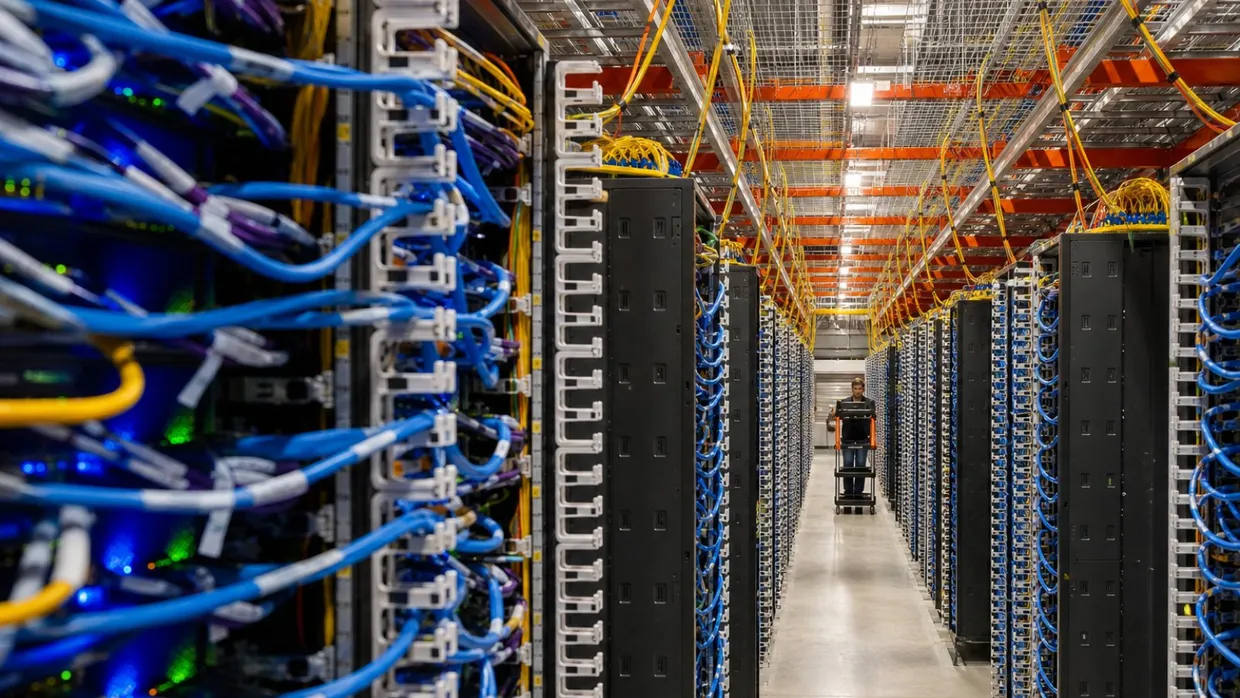
Goldman Sachs expects the US data centre buildout to keep adding pressure to electricity markets through 2028, as artificial intelligence drives demand for larger and more power-intensive facilities.
The brokerage said data-centre power capacity in the US has already risen sharply this year and could keep expanding at a pace that adds upside risk to both power and natural gas demand. For energy and macro markets, the key issue is whether the AI infrastructure boom continues to absorb more electricity supply and strengthens gas use over the coming years.
Capacity growth
Goldman Sachs said an additional 52 gigawatts of data-centre power capacity could come online in 2028. The projection reflects continued construction of more facilities, as well as a shift toward sites that use more power per location.
The bank said US data-centre power capacity and demand have increased by nearly 30 per cent year-to-date. It added that the sector has accounted for more than one third of total US power demand growth over that period.
That makes data centres a significant driver of the changing US electricity demand profile. The buildout is tied to the AI boom, which has encouraged the development of more, larger and increasingly power-dense facilities.
Goldman said growth is expected to come from both a higher number of data centres and changes in the type of facilities being built, including larger sites and greater power density. Those trends mean electricity requirements could rise even without a proportional increase in the number of individual projects.
Gas outlook
The rapid expansion could further tighten US power markets, Goldman Sachs said. Higher electricity demand from data centres can also raise natural gas demand where gas-fired generation is used to meet power needs.
The brokerage said the data-centre trend reinforces its bullish outlook for Henry Hub gas prices between 2028 and 2030. It did not give a specific price level in the comments.
Natural gas traders often watch long-term demand changes closely because they can alter expectations for supply balances, power-sector fuel use and storage needs. Goldman’s comments point to data centres as one of the demand-side forces that could matter more over the second half of the decade.
For broader markets, the development adds another layer to the energy outlook. A tighter power market can affect costs for large electricity users, while higher gas demand can influence expectations for future fuel pricing. Goldman’s remarks were focused on power and natural gas rather than gold or XAU/USD, so any read-through for precious metals is indirect.
Policy risk
Goldman Sachs also said political developments could moderate the upside risk to demand. Potential policy shifts after the midterm elections may bring more scrutiny of data centre development.
Democratic victories in November’s midterm elections, including wins in Republican strongholds and major data centre hubs Texas and Georgia, are expected to produce divided government. That outcome could lead to closer examination of the pace and impact of new data-centre projects.
Any additional scrutiny could matter for the timing or scale of future capacity additions. Goldman still framed the underlying trend as one of accelerating growth, but noted that policy changes could reduce some of the upside risk around power and gas demand.
The central market question is whether AI-related infrastructure continues to expand quickly enough to keep tightening power supply-demand conditions. Goldman’s view is that strong US data-centre power capacity growth is likely to continue through 2028, with natural gas demand among the markets most exposed to the trend.