New Zealand dollar slides as Fed and RBNZ paths diverge
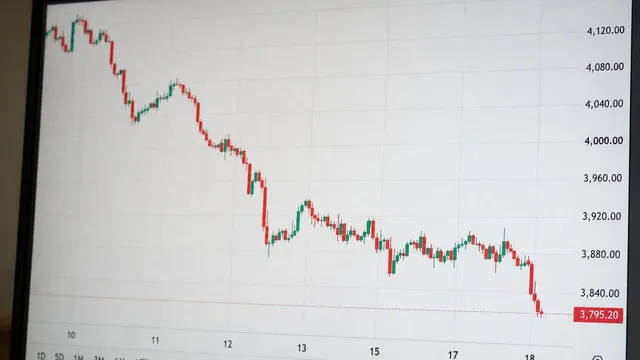
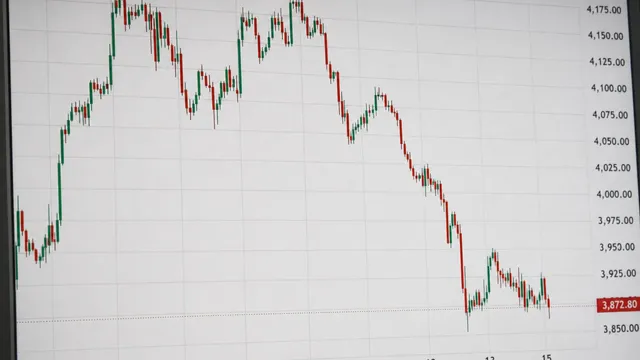
NZD/USD hovered near its lowest level since March 2020 as softer New Zealand data contrasted with hawkish Fed signals.
Top-rated brokers
Compare all 9- 1
 XMBest overall for gold CFDsGold spread0.25Visit XM (opens in a new tab)
- 2
 XTBGold CFDs and real gold ETFsGold spread0.35Visit XTB (opens in a new tab)
- 3
 PepperstoneMost regulatorsGold spread0.05Visit Pepperstone (opens in a new tab)
CFDs are complex instruments and come with a high risk of losing money rapidly due to leverage. You should consider whether you understand how CFDs work and whether you can afford to take the high risk of losing your money.


NZD/USD extended its fall on Wednesday, trading around 0.5490 and down 0.14%, as the New Zealand dollar stayed under pressure against a firmer US dollar.
The pair hovered near its lowest level since March 2020, with investors focused on the widening gap between expectations for the Reserve Bank of New Zealand and the Federal Reserve. For gold traders, the same dollar and Fed-rate backdrop is relevant because a stronger greenback can shape conditions across dollar-denominated markets.
Kiwi weakens near pandemic-era lows
The New Zealand dollar remained under pressure after a dovish shift from the RBNZ in October continued to weigh on sentiment. The currency has struggled as traders assess whether softer domestic data gives the central bank more room to keep policy accommodative.
Labour-market weakness has added to that view. New Zealand’s unemployment rate stands at 5.7%, pointing to continued slack in the economy.
Inflation expectations were mixed in the RBNZ’s fourth-quarter survey released earlier this week. Two-year expectations edged up to 2.36% from 2.34% in the prior quarter, while one-year expectations stood at 2.92%.
Political uncertainty has also become part of the currency backdrop. Preliminary results from New Zealand’s November 7 general election indicate that a National-led coalition holds a narrow one-seat majority, with official results due on November 27. A potential Labour-led government could restore employment to the RBNZ’s mandate, a change that could reinforce expectations for accommodative monetary policy.
Producer prices point to easing pressures
Fresh producer price figures added to the case for a less restrictive RBNZ stance. Statistics New Zealand reported on Wednesday that the Producer Price Index for output rose 0.8% quarter on quarter in the third quarter.
That was below market expectations for a 1.1% increase and marked a slowdown from the previous quarter’s 1.7% rise.
Input producer prices also cooled. They increased 0.7%, well below the 1.5% forecast and sharply slower than the 2.9% increase recorded in the previous quarter.
The data suggest inflationary pressure at the production level is easing, which may give the RBNZ additional scope to maintain an accommodative approach.
US dollar supported by Fed rhetoric
The US dollar has drawn support from increasingly hawkish commentary by Fed officials after stronger-than-expected inflation figures.
St. Louis Fed President Alberto Musalem recently signalled that several additional interest rate hikes may be needed to contain persistent price pressures. That message contrasts with the more accommodative expectations surrounding the RBNZ.
US retail data also supported the greenback. October retail sales rose 0.2% month on month, matching expectations. Sales excluding automobiles increased 0.6%, ahead of the 0.4% forecast, while the retail sales control group also advanced 0.6%.
Those figures pointed to resilient consumer spending, giving investors another reason to watch whether the Fed maintains a restrictive stance.
Market attention now turns to the minutes of the Fed’s October monetary policy meeting, scheduled for release later on Wednesday. Traders will look for further signals on the central bank’s interest-rate outlook.
Technical levels remain in focus
On the weekly chart, NZD/USD was trading at 0.5488, with analysts describing the near-term bias as bearish while the pair remains below key long-term moving averages.
The 200-week simple moving average sits at 0.5949, and analysts see that level as initial resistance that would need to be reclaimed to ease downside pressure on the weekly horizon.
The pair also remains below the 100-week simple moving average at 0.5810, keeping broader pressure tilted to the downside. The Relative Strength Index was at 34, signalling persistent but not extreme oversold conditions.
As long as the gap between a hawkish Fed and a more accommodative RBNZ remains in place, analysts see NZD/USD as vulnerable near its pandemic-era lows.