Waller backs possible half-point Fed hike as inflation stays hot
Fed Governor Christopher Waller says a half-point rate rise may be needed in December as inflation remains above target.
Top-rated brokers
Compare all 9- 1
 XMBest overall for gold CFDsGold spread0.25Visit XM (opens in a new tab)
- 2
 XTBGold CFDs and real gold ETFsGold spread0.35Visit XTB (opens in a new tab)
- 3
 PepperstoneMost regulatorsGold spread0.05Visit Pepperstone (opens in a new tab)
CFDs are complex instruments and come with a high risk of losing money rapidly due to leverage. You should consider whether you understand how CFDs work and whether you can afford to take the high risk of losing your money.

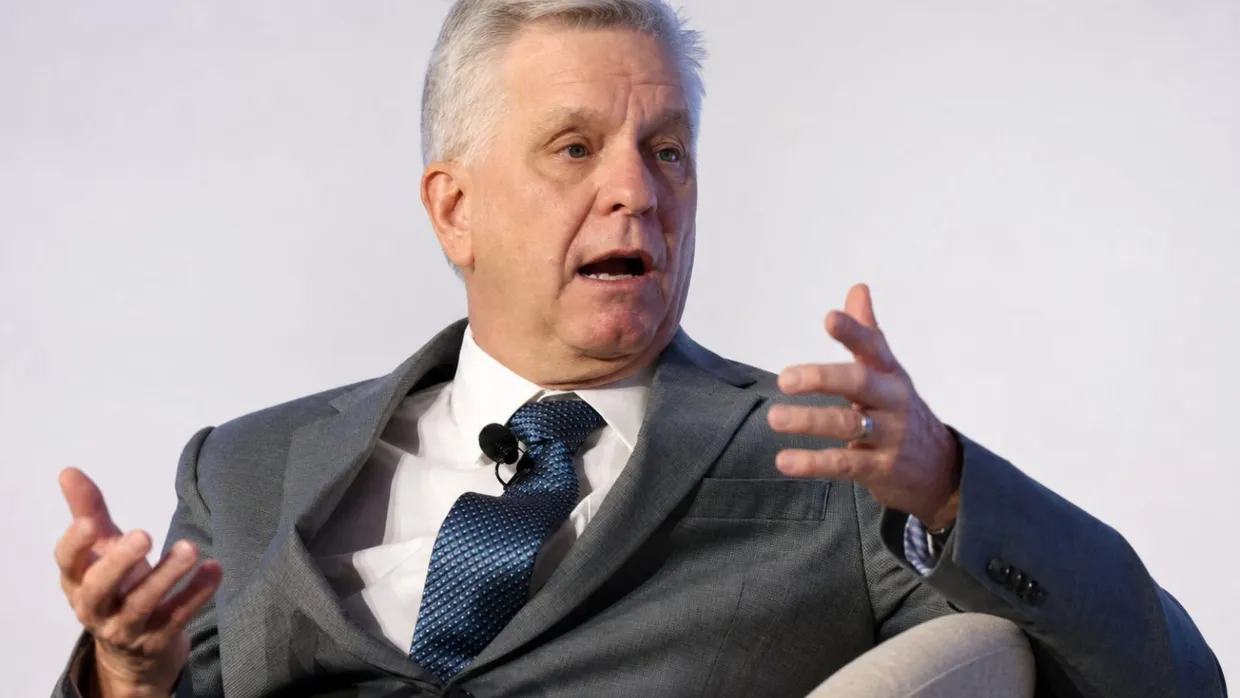
Federal Reserve Governor Christopher Waller signalled support for a more forceful response to inflation on Wednesday, saying the central bank may need to deliver a half-percentage-point increase in its benchmark interest rate at the Dec. 8-9 Federal Open Market Committee meeting.
The comments add to a more hawkish debate inside the Fed as inflation remains above the central bank’s 2% target. For gold and XAU/USD traders, the rate path remains a central market focus because Fed decisions shape expectations across major asset classes.
Waller pushes for a stronger move
Waller told CNBC in a live interview that policymakers may need to “shock people” after price pressures proved stronger than he had expected. He said he was deeply worried about inflation moving in the wrong direction and broadening across the economy.
His near-term preference is for the Fed to reverse the three quarter-point rate cuts approved in 2025 and potentially go further. The Fed made those cuts amid concern over the labour market and expectations that inflation would keep moving toward the 2% goal.
Waller said a half-point increase in December would not be necessary in all circumstances. In his view, a quarter-point move could be paired with a clear signal that another increase would follow in January. But he said that if officials are not prepared to communicate a January move clearly, then a 50-basis-point rise in December would be needed to get policy in place.
Fed Chairman Kevin Warsh has opposed that kind of forward guidance, arguing that it can restrict policymakers’ flexibility.
Markets price a sequence of hikes
Futures markets are fully pricing in a quarter-point rate increase at the December FOMC meeting, according to the CME Group’s FedWatch gauge. Traders are also anticipating another move in January and at least one additional increase before the end of 2027.
The Fed raised rates in September for the first time in more than three years, then left rates unchanged at its October meeting. Minutes from that October meeting are due later Wednesday and may give markets more detail on how officials weighed inflation risks against other parts of the outlook.
Waller’s remarks suggest that at least some policymakers see the current stance as insufficient to bring inflation down. He argued that returning the policy rate to where it stood before the 2025 cuts may not be enough, because inflation was not falling adequately at that time.
Fed officials differ on the pace
Other Fed officials have also pointed to the need for tighter policy, though they differ on how quickly to move.
St. Louis Fed President Alberto Musalem said in a speech Tuesday that as many as four hikes could be needed by the spring of 2027. Cleveland Fed President Beth Hammack and Dallas Fed President Lorie Logan have supported a more gradual approach.
New York Fed President John Williams sounded less inclined toward a larger near-term move. Speaking Tuesday in a conversation with Axios, he said the situation did not call for “dramatic action” and that the Fed’s recent process of gathering data, analysing it and debating policy was working well.
The divergence leaves the December meeting as a key test of how concerned officials are about persistent inflation. Most policymakers appear to agree that more tightening is required, but Waller’s comments put a sharper focus on whether the Fed will choose a standard quarter-point increase or a larger half-point step.
Inflation remains above target
Inflation picked up earlier this year after strikes launched by the U.S. and Israel against Iran in late February. Energy prices jumped, while the effects of tariffs continued to feed through, leaving most inflation readings above 3%.
That backdrop has kept pressure on the Fed to show that it remains committed to returning inflation to 2%. Waller’s argument is that the central bank must first take back the 2025 rate cuts and may then need additional increases to get inflation moving lower again.
For precious-metals markets, the debate reinforces the importance of incoming inflation data, FOMC communication and market pricing around the next two policy meetings.